Scarborough Train Station and Clock Tower

Scarborough Train Station scaffolding

J Gunn Scaffolding was proud to work on the restoration of Scarborough Train Station and Clock Tower. Let’s have a closer look at the project.

A classic Victorian station

Scarborough Train Station first opened on 7 July 1845, serving as the terminus of the line from York. The design was by notable railway architect George Townsend Andrews, one of the most significant names in early Victorian railway architecture.

The station originally had a large booking hall, waiting rooms for various classes, toilets, porters’ rooms, and a refreshment room. It had two platforms at first, connected at the north end, with four tracks and turntables between them.

There was a significant expansion of the station in the late 19th century; as seaside tourism grew, the station had to expand so it could cope with rising passenger numbers. It got two new platforms (now Platforms 1 and 2) with additional waiting rooms and amenities in 1883.

Restoration

Scarborough Train Station is a Grade II building, obtaining the status on 8 June 1973 in recognition of its architectural and historical importance. However, as part of Network Rail’s newest restoration project, it would receive new upgrades. They would take place in two phases.

Network Rail asked several of their preferred suppliers to submit competitive quotations for the complex restoration works, including a large amount of scaffolding. Colt Construction was successful in winning the contract.

The scaffolding was designed by RV Engineering, a specialist who works closely with Colt and Network Rail. J Gunn Scaffolding was chosen as the preferred scaffolding supplier because we have a vast amount of experience and knowledge of train station working environments. Crucially, we’ve had the pleasure to work with Colt on several other key projects.

The station

The first part of the project was work on the platforms. RV Engineering had to begin by designing a scaffolding crash deck. However, as well as facilitating the restoration work, it had to ensure the station

operations would be able to continue, supporting staff, pScarborough Train Station scaffoldingassenger’s, and the public.
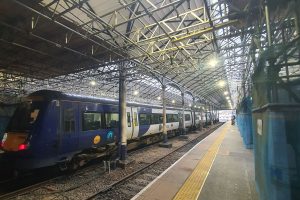
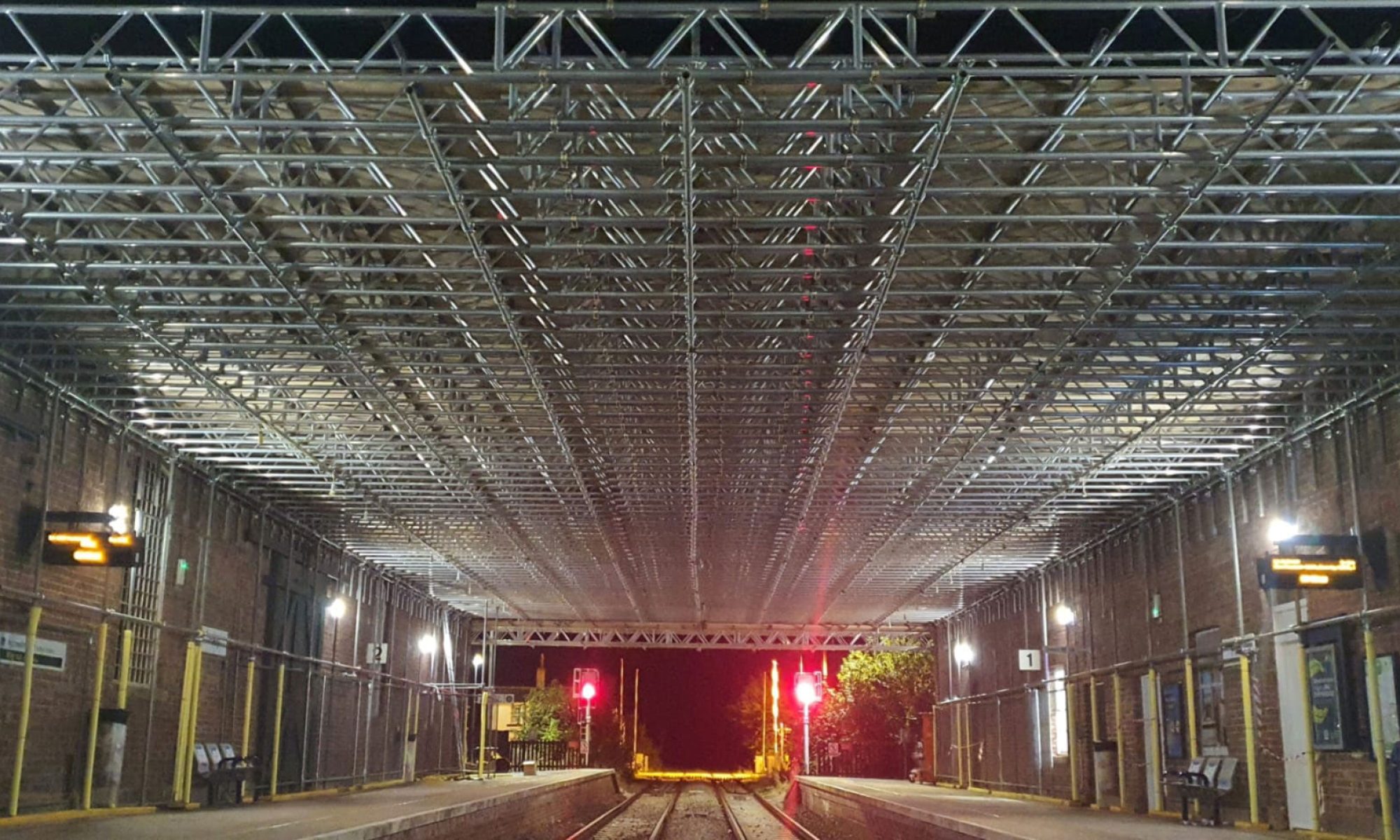
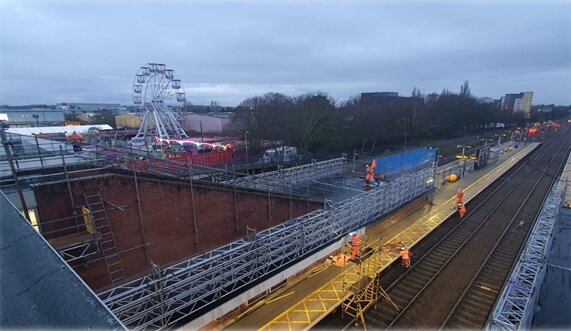
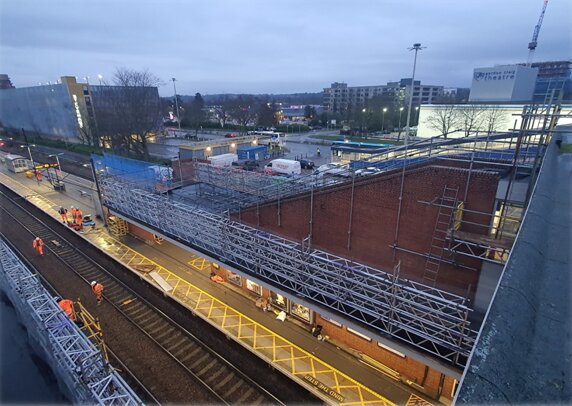
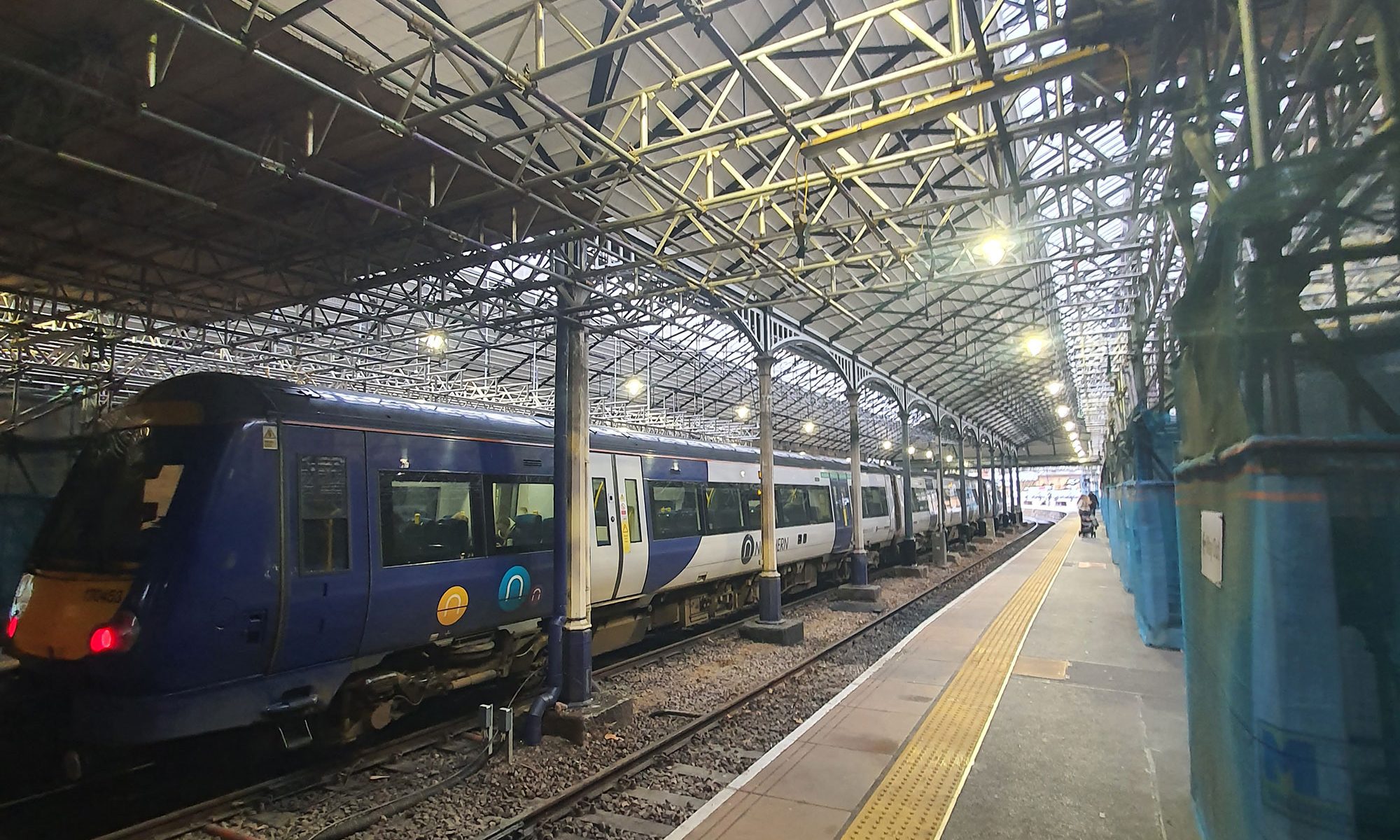
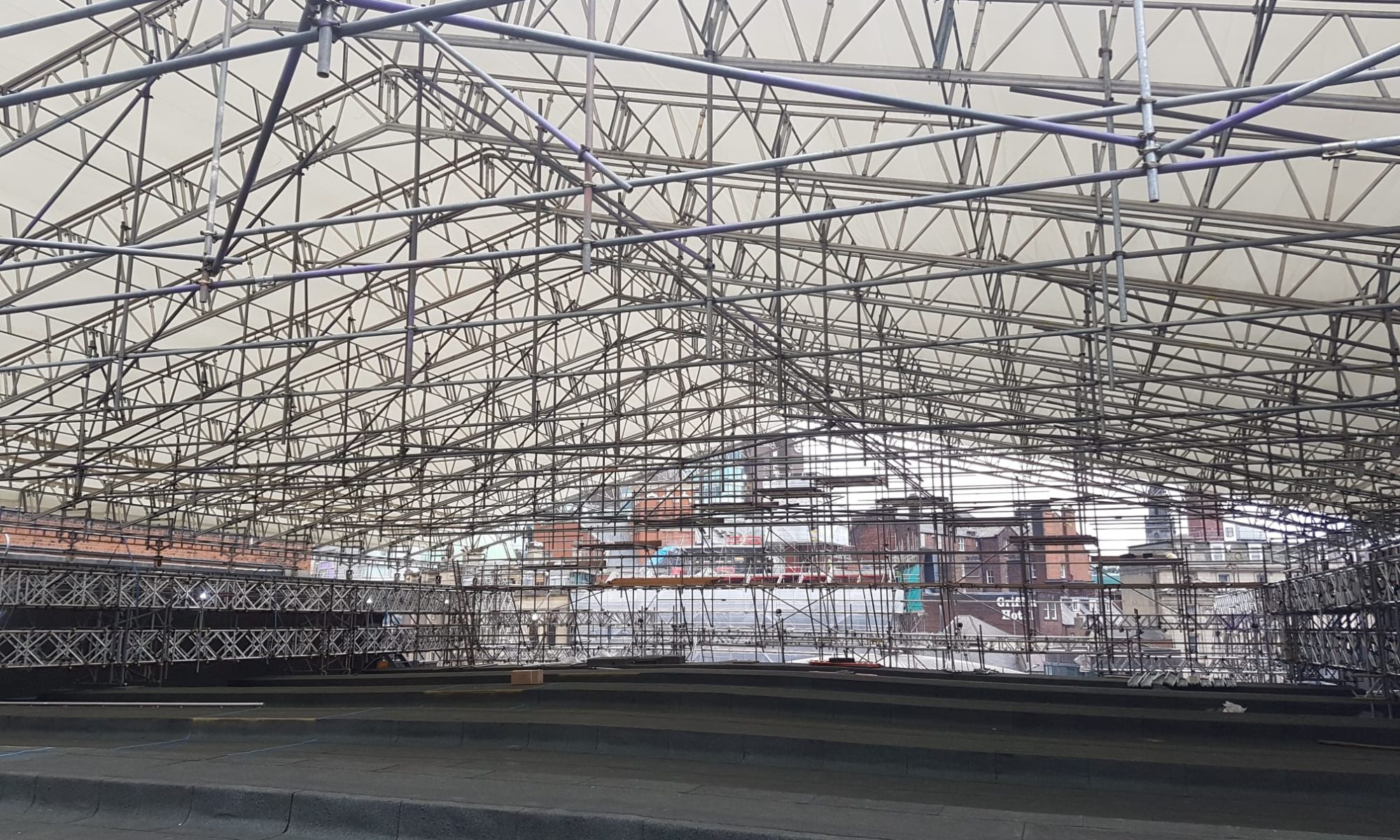
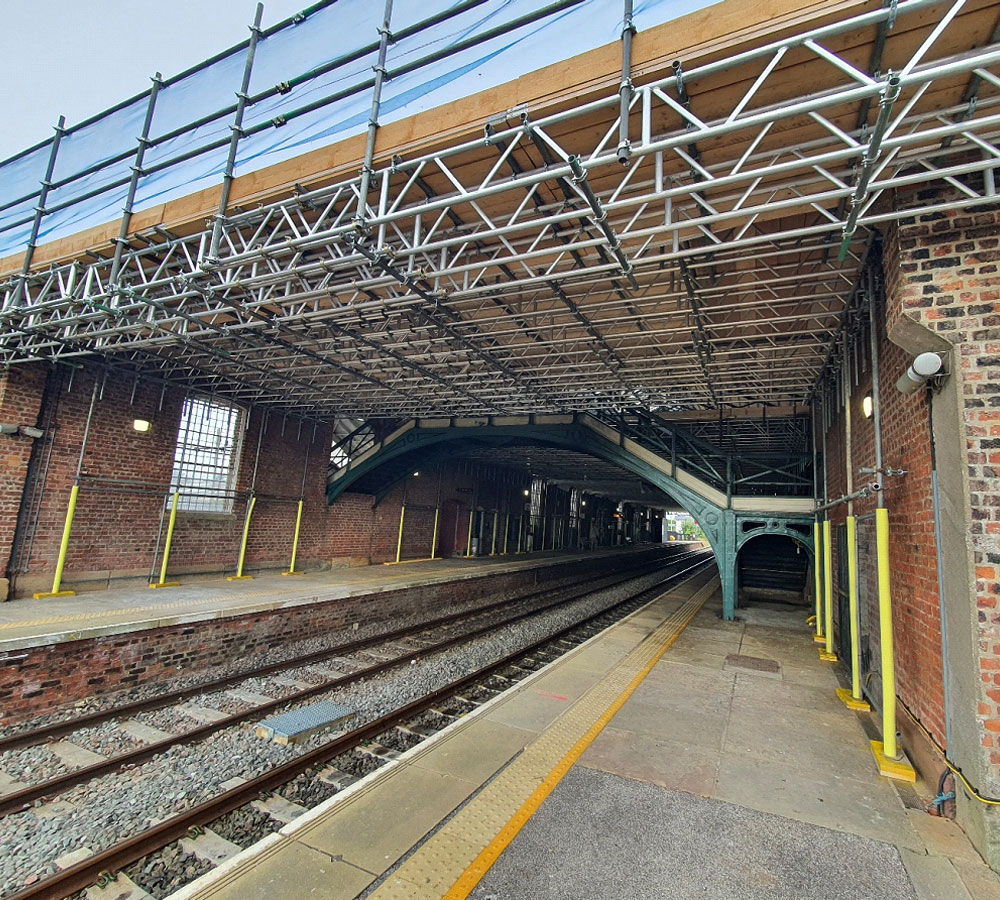
The scaffolding crash deck was designed to cover the full concourse of the station’s platforms. As a result, it had to include ventilation for the trains. Additionally, it had to include fire protection, so below the crash deck had to feature a fire blanket.

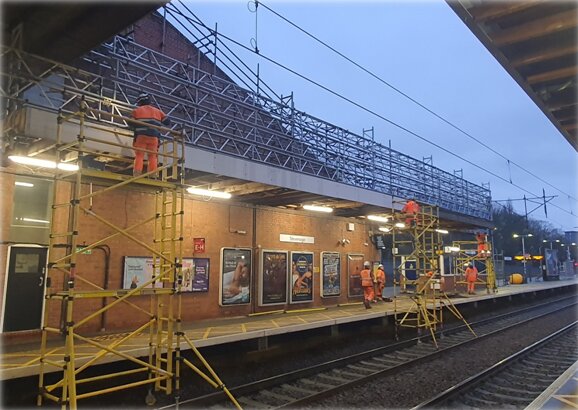
The scaffolding work began in 2021 with the construction of large numbers of support towers on each platform to take the weights of the unit beams holding up the crash deck. The towers’ design also had to ensure they did not affect the sight of the train drivers when entering or leaving the station.

Once the crash deck frame was built, the area was double boarded and sheeted with FR rated materials to prevent dust or other loose debris falling.

Above the crash deck were two additional independent towers to allow safe access to the taller areas of the roof. This was necessary to allow removal of the glass panels and replacement with slate.

The clock tower
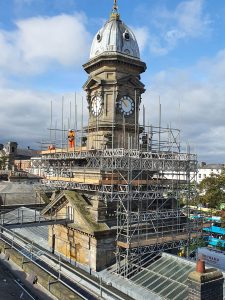
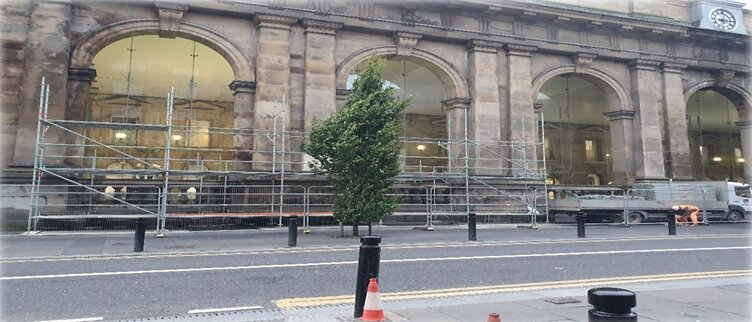
Scarborough Train Station Clock Tower scaffoldingScarborough Train Station’s clock tower was an addition in the 1880s, around 1882 to 1884, as part of the expansion. It has an elaborate Baroque style with a lead dome, making it more decorative than the classic pavilions of the original building. The clock tower contrasts with the rest of the station’s Italianate architecture, adding vertical emphasis and a sense of grandeur to the central pavilion.

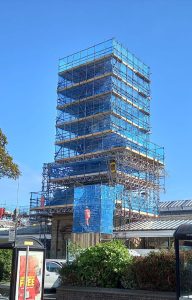
The second part of the restoration work was to repair stonework on the clock tower. Completing this job would require another complex piece of scaffolding to allow stonemasons to work safely on all levels simultaneously. Once again RV Engineering did the design.

The complex clock tower scaffolding had four support towers and 750-unit beams spanning above and around the structure to allow access to all areas. Additionally, the scaffold punched up, introducing 450 unit beams for weight distribution.

Like the work on the platforms, the scaffolding for the clock tower also had to ensure that the train station could operate as usual, ensuring no harm to passages, staff, and the public.

A successful scaffolding project

We’re incredibly proud to say we were able to complete our work here safely, on time, and within budget.
If you’d like

to find out more or have another project to discuss with us, please get in to

uch.

Leeds Train Station Critical Works

J Gunn Scaffolding have erected a 1200m2 working platform at Leeds Train Station. The 26 scaffolding towers were designed and built based upon the location of the main arches that hold up the main station. The towers were also hoarded as security to prevents access. Unit beams span across the full area to create a floating platform. Fire proofed boards are doubled up, and a flame retardant membrane is between. It allows 24 hour work on the working platform.

A HAKI rolling roof system was also built on the outside of the train station. The roof system was designed to prevent any water egress. Crucially, it could be opened and close at any time. This was to allow old steel work to be removed and new steel work to be installed to keep the work continuing at all times.

The station remained open at all times during the erection of the scaffolding. In fact, the works were designed to avoid any disruption to the public, ensure safe operation of trains, and maintain access and egress to the station at all times. A time lapse video was produced to showcase our work.

Luton Relay Room

In preparation for another Important/Critical Network Rail Relay room upgrade, J Gunn Scaffolding are working with Colt Construction who are in partnership with Network Rail. The building needed work due to water ingress because of the ageing structure.

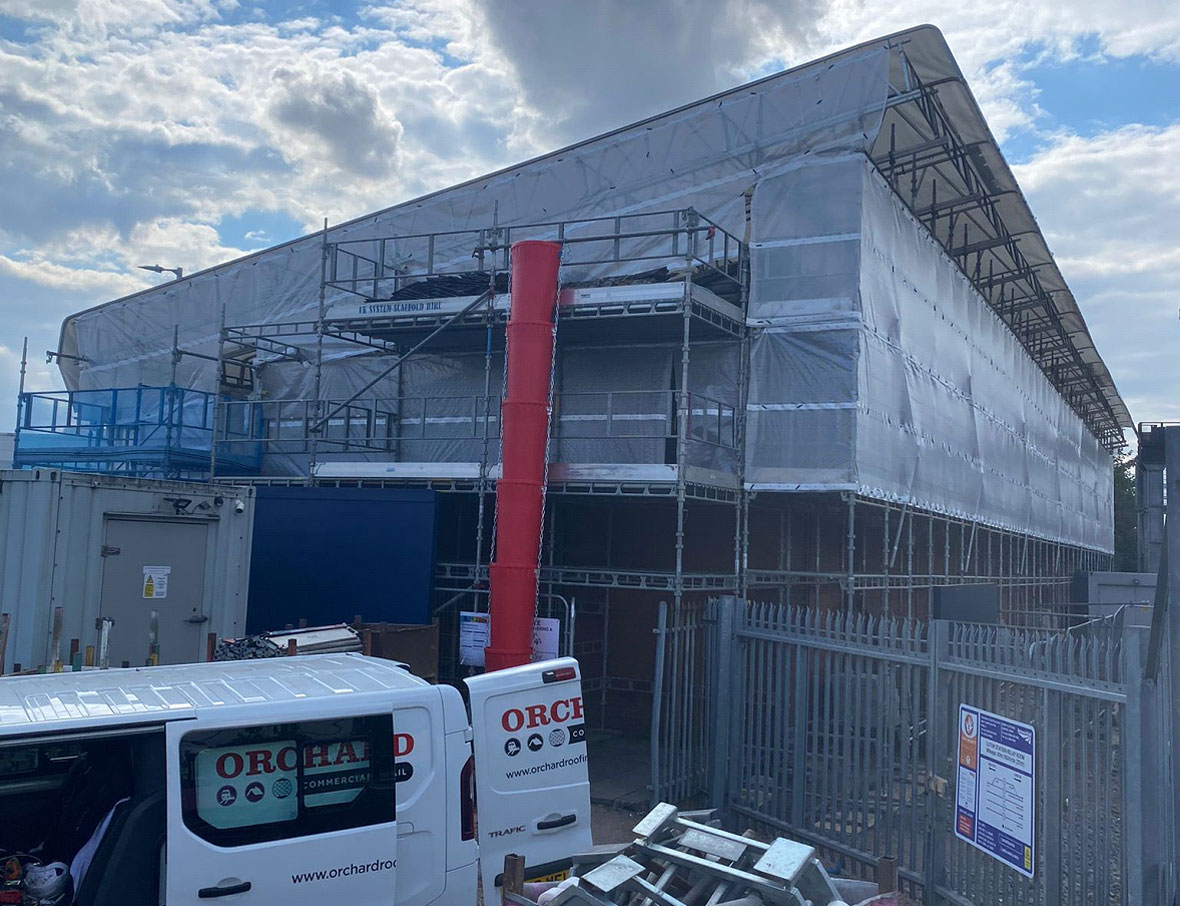
J Gunn Scaffolding erected a fully designed system of independent scaffolding to the perimeter of the relay room. We also installed a full static Haki roof system. It was challenging to work near the track side, but we have the correct PTS trained operatives to install this type of work.

J Gunn Scaffolding have the required scaffolding accreditation, as well as the ISO accreditation (9001, 14001 & 45001), with an audit annually. We’re also qualified with CISRS and HAKI roofing systems.

J Gunn Scaffolding have successfully delivered a large number of high volume, high value and critical works such as this type of work. To allow the removal of the relay roof, we had to ensure that the critical buildings would be weathertight.

The HAKI roof system is designed to prevent any water egress upon opening and closing this roof system. The old roof was removed and lowered and a new roof installed. It was a vital project due to the critical work that the relay room does for Network Rail; it controls the track points in the main Kings Cross station.

The relay room was monitored and remained open at all times during the erection of the scaffolding and has been designed to avoid any disruption, ensure safe operation of trains, and maintain access and egress to the Kings Cross Station.

Before
Ater

Major roof repairs to Grade 2 listed Filey Train Station

J Gunn Scaffolding worked with Colt Construction, who are in partnership with Network Rail, on new major roof repairs to the Grade 2 listed building at Filey Train Station.

J Gunn Scaffolding erected fully designed independent scaffolding to the full perimeter of the train station. It also had to bridge over the rail tracks at both sides of the building for roof repairs.

A 1800m2 scaffold crash deck was also built with design from RV Engineering, The crash deck was designed by bolting the scaffolding to the walls with very minimal scaffold on the platform due to the platform size. Shear and pull tests were done to demonstrate the weight calculations could hold the scaffolding crash deck.

The scaffolding has a 60-minute fire rating with mechanical ventilation and natural ventilation for train exhausts.

The station remained open at all times during the erection of the scaffolding. The project has been designed to avoid any disruption to the public, allow safe operation of trains, and retain access and egress to the station including maintaining Fire Escapes at all times.

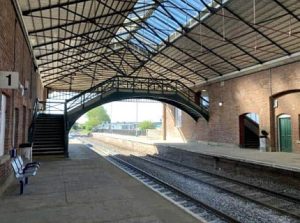
Before
After

Major shed roof repairs at Grade 2 listed Scarborough Train Station

In preparation for major train shed roof repairs at Grade 2 Listed Scarborough Station, J Gunn Scaffolding are working with Colt Construction who are in partnership with Network Rail.

J Gunn Scaffolding has erected a 2500m2 scaffold crash deck. The scaffolding has a 60-minute fire rating. It also features mechanical ventilation and natural ventilation for train exhausts requiring a complex fire modelling system.

The station remained open at all times during the erection of the scaffolding. The access has been designed to avoid any disruption to the public, allow safe operation of trains, and maintain access and egress to the station, including maintaining Fire Escapes at all times.

Upon detailed examination of the Victorian-made platforms, significant voids were found to be present. These received mass pour concrete to fill. In addition, there were loose ground conditions. They required a strengthening solution that could provide ground support for a load of 100kN/m2 to 36 scaffold towers before work could begin.

Wylam Train Station

Commercial Scaffold Erection & Scaffold Inspection services at Wylam Train Station, in partnership with Colt Construction, for Network Rail.

PROJECT DETAILS

J Gunn Scaffolding were asked to provide Safe Access and Egress to various Network Rail Signal boxes within the UK. Due to weathering to the listed buildings, the work was to provide a scaffolding service that allowed for a full refurbishment of the Signal boxes to take place.

Working in partnership with RV Engineering, J Gunn Scaffolding undertook a site visit to a number of Network Rail Signal boxes to understand the full scope of work – starting with the Hexham and Wylam Signal boxes.

CAD Drawings of the Signal boxes were produced by RV Engineering. The task given to J Gunn Scaffolding was to safely erect complex scaffolding which required to be built around the building and spanned with 750- and 450-unit beams across the railway line, allowing the refurbishment to commence whilst the train lines remained in full use.

To enable the work to be completed safely, careful planning was required, resulting in a number of rail line closures and night shift working. An onsite supervisor led the team safely, completing the work without any incidents or accidents.